Structural Support That Keeps Trees Standing
Bracing and Cabling in Pine Bush for split trunks and heavy limbs at risk of failure
A vertical crack running up the center of a mature maple trunk or a co-dominant stem beginning to separate signals that the tree's structure can no longer support its own weight without assistance. Bracing and cabling systems installed by Archie's Trees provide external support that holds weak unions together and redistributes stress away from failing connection points. The approach preserves trees that would otherwise require removal, maintaining shade and property value while eliminating the immediate hazard.
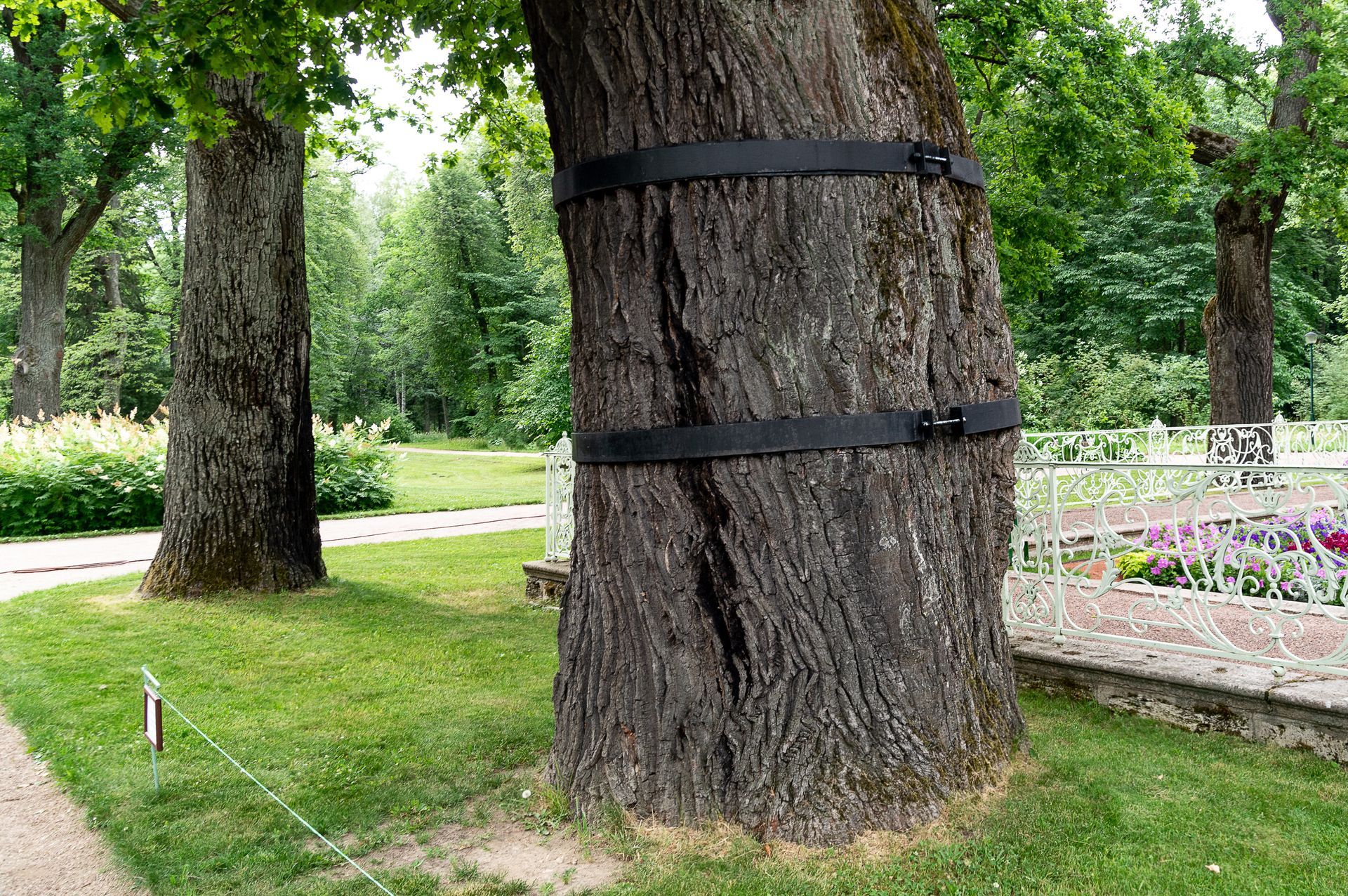
Steel cables are installed high in the canopy to limit the movement of heavy limbs, while threaded rods are drilled through weak unions lower in the tree to physically hold splitting sections together. The hardware is sized and positioned based on the tree's species, the angle of the defect, and the load each support point will carry during high winds or ice accumulation common to Pine Bush winters.
Arrange an on-site evaluation to determine whether your tree is a candidate for stabilization or requires removal.
How Support Systems Prevent Limb Failure
The cables and bracing rods transfer mechanical stress from weak attachment points to stronger sections of the tree, preventing the twisting and lateral movement that causes splits to widen over time. Once installed, the hardware remains in place permanently, checked periodically to ensure that tree growth has not compromised the system's integrity or caused the cables to become embedded in expanding bark.
You'll see that previously leaning sections of the tree no longer shift noticeably during windstorms, and the crack or split stops progressing deeper into the trunk. The tree continues to grow around the hardware, often adding callus tissue that further reinforces the union, though the original structural weakness remains and the support system cannot be removed without reintroducing the risk of failure.
Not all trees respond well to cabling, particularly those with advanced decay at the connection point or root systems already compromised by disease. Professional evaluation identifies whether the tree has enough healthy wood to anchor the hardware securely and whether the cost of installation is justified by the tree's remaining lifespan and location relative to structures.
Answers to Frequent Service Questions
Support system installations raise specific questions about durability, visibility, and long-term tree health across the Hudson Valley.
How long does the hardware last?
Galvanized steel cables and rods resist corrosion for decades, though annual inspections confirm that tree growth has not shifted the attachment points or created new stress concentrations.
What does the installation process involve?
Holes are drilled through the trunk at precise angles to avoid damaging the tree's vascular system, and cables are tensioned to limit movement without restricting all natural sway that keeps the tree's wood strong.
Why not just remove the tree instead?
Mature trees provide shade, aesthetic value, and cooling that take decades to replace, making stabilization a cost-effective option when the tree is otherwise healthy and positioned where its failure would cause significant property damage.
How visible is the hardware after installation?
Cables are typically installed high in the canopy where they blend into the branch structure, while threaded rods are positioned to minimize visual impact from ground level.
When should support systems be installed?
Systems are installed during the dormant season when the tree is less active and when upcoming spring growth will help the tree adapt to the new support structure without additional stress.
Archie's Trees evaluates tree structure and stability risks before recommending cabling or bracing, ensuring that support systems are installed only where they provide meaningful safety improvements. Schedule an inspection to assess your tree's structural integrity and review stabilization options.